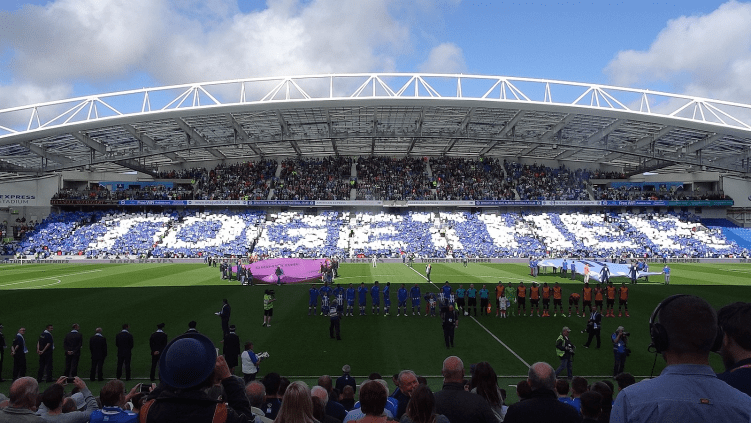
Dr Swanson recently published an article in Sport Management Review on Identity Leadership with Drs Yuhei Inoue, Daniel Lock, Leah Gillooly, and Richard Shipway.
For this year’s International Day of Sport for Development and Peace, António Guterres—the United Nations’ secretary general—communicated his belief that “the world of sport has crucial contributions to make in forging a safe and sustainable recovery” from the COVID-19 pandemic. That sport may facilitate crisis recovery is hardly a new idea. In past crises—9/11, Hurricane Katrina, and the 2010 Haiti earthquake, to name a few—sport organizations and their members were said to have played important societal roles (Inoue & Havard, 2015). Yet little attempt has been made to explore “how” sport organisations can contribute to crisis recovery.
The Organizational Identification and Well-being Framework, which we proposed in a recent article, seeks to answer this question. It rests on the capacity of sport organizations to serve as a prominent source of group identity (i.e., a shared sense of who “we” are) for individuals (Lock & Heere, 2017). People may identify with a range of social groups, such as ethnicity, gender, and religion. Yet what makes identification with a sport organization significant is that it tends to map onto other group identities (e.g., sport and geographic region; Heere & James, 2007).
Moreover, once people identify with a sport organization, they gain access to shared resources (e.g., social support, relatedness) that can enhance their well-being (Inoue et al., 2015; Wann, 2006). As such, the central premise of our framework is that sport organizations—where they have capacity—can facilitate recovery from a crisis to the extent that they foster shared identification (i.e., sense of oneness) to galvanize support towards relief efforts.
More information can be found here.
 Dr Steve Swanson